
Conservation burial and sustainable death care: what we shared at our Sydney talk
What we shared at our talk on conservation burial and sustainable death care in Sydney, with Walawaani Way and Danni Petkovic. Plus what it means for your wishes.
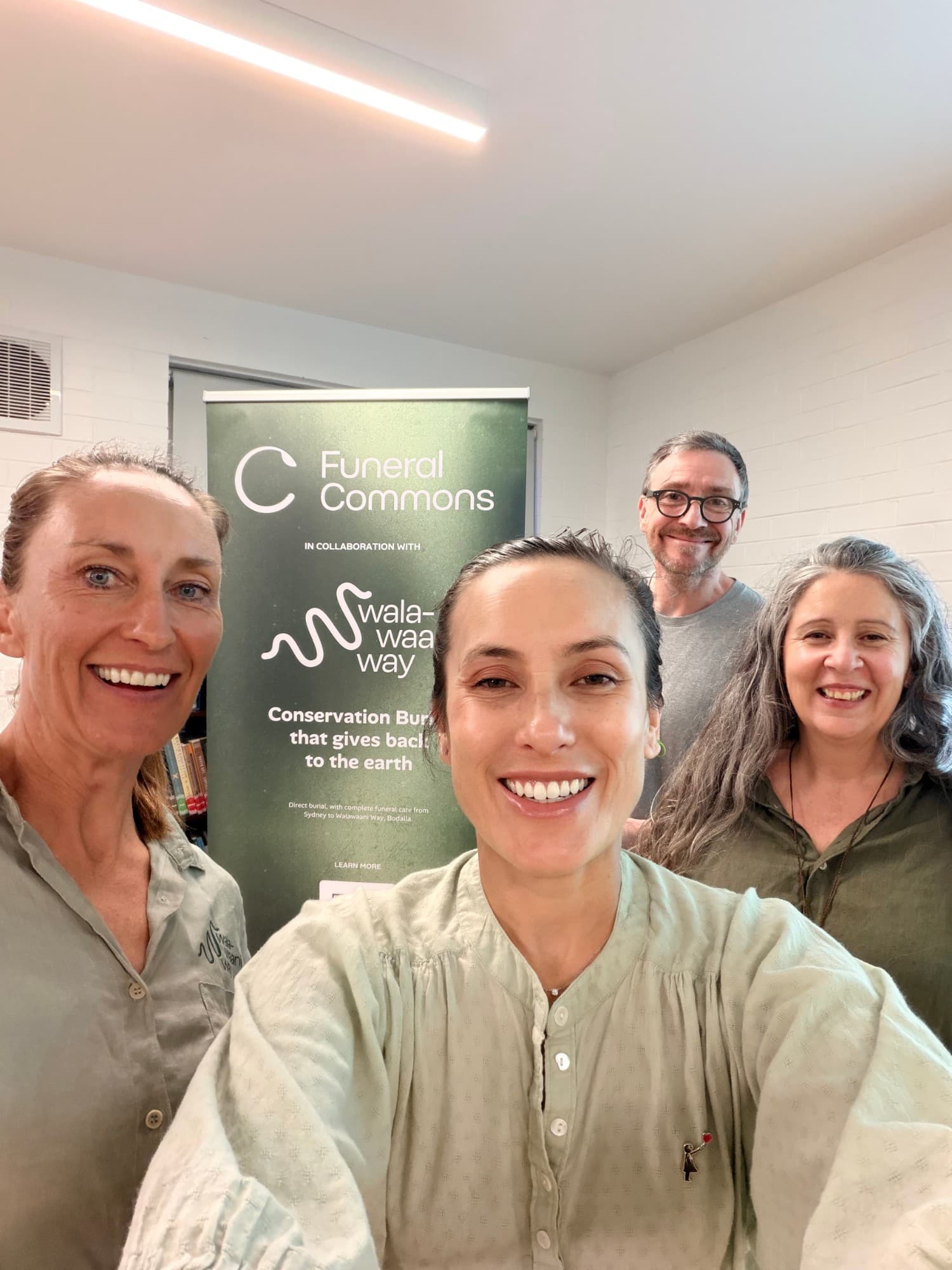
With an ageing population, and as we head into "peak death", a sustainable model of death care is extremely important.
On Thursday 29 October 2026, I was joined by Fiona from Walawaani Way and death literacy educator Danni Petkovic for a conversation about conservation burial and sustainable death care in Sydney's Inner West Sustainability Hub. Thank you to Inner West Council for supporting the evening, and to everyone who came and asked such great questions.
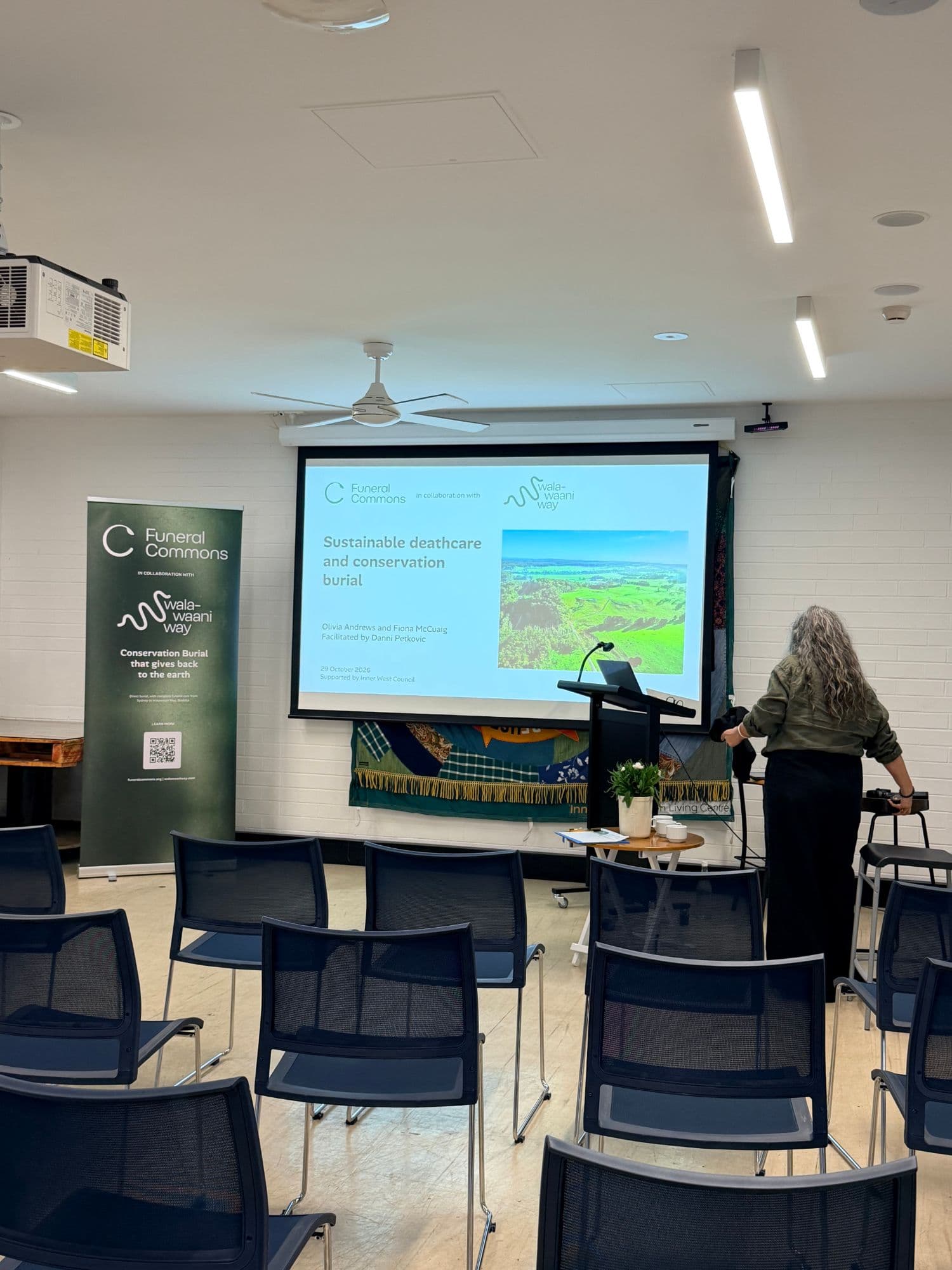
We talked about something many of us rarely get to discuss openly: what happens to our bodies, and to the land, after we die, and how those choices can give something back.
What is sustainable death care?
At Funeral Commons, sustainable death care has three parts.
Environment
Natural, environmentally responsible funeral practices, whether you choose burial or cremation. That can mean a shroud or biodegradable coffin, no embalming, locally grown flowers without plastics, natural burial, or a simple cremation with thoughtful care of ashes.
Affordability
Clear pricing, so families can choose what they need and what fits their budget. You shouldn't have to pay for things you don't want, or decide anything under pressure. And an environmentally conscious funeral doesn't automatically cost more. Many people assume it's out of reach, but that isn't the case.
Community
Death, dying and grief are everyone's business. Drawing on the public health palliative care and compassionate communities approach, we want to build community capacity, so people feel more confident caring for one another at the end of life.
What is conservation burial?
Conservation burial brings environment, affordability and community together. It's a natural burial in land that is being protected and restored. There's no embalming, no concrete and no plastic. The burial fees help pay for the care and regeneration of the land, so the grave becomes part of a living forest rather than a manicured lawn.
Walawaani Way, near Bodalla on the NSW south coast, is Australia's first conservation burial ground. The land was once a cattle paddock and is now being restored as endemic forest, including habitat for Glossy Black Cockatoos. Funeral Commons works in partnership with Walawaani Way to bring families from Sydney to the south coast, with funeral care from the first phone call to the burial.
What a circular funeral can look like
A circular funeral thinks about where every material comes from, what goes into making it, and what happens to it afterwards. On the night we shared some examples you could see and touch:
- A coffin woven from Cat's Claw vine, an invasive weed (d’Vine coffins)
- Reclaimed timber coffin building workshops, through our work with Among the Trees
- Shrouds made from natural fibres, which can include clothing or items that hold memories
- Loop's mycelium (mushroom) coffin of which Funeral Commons is a Founding Partner
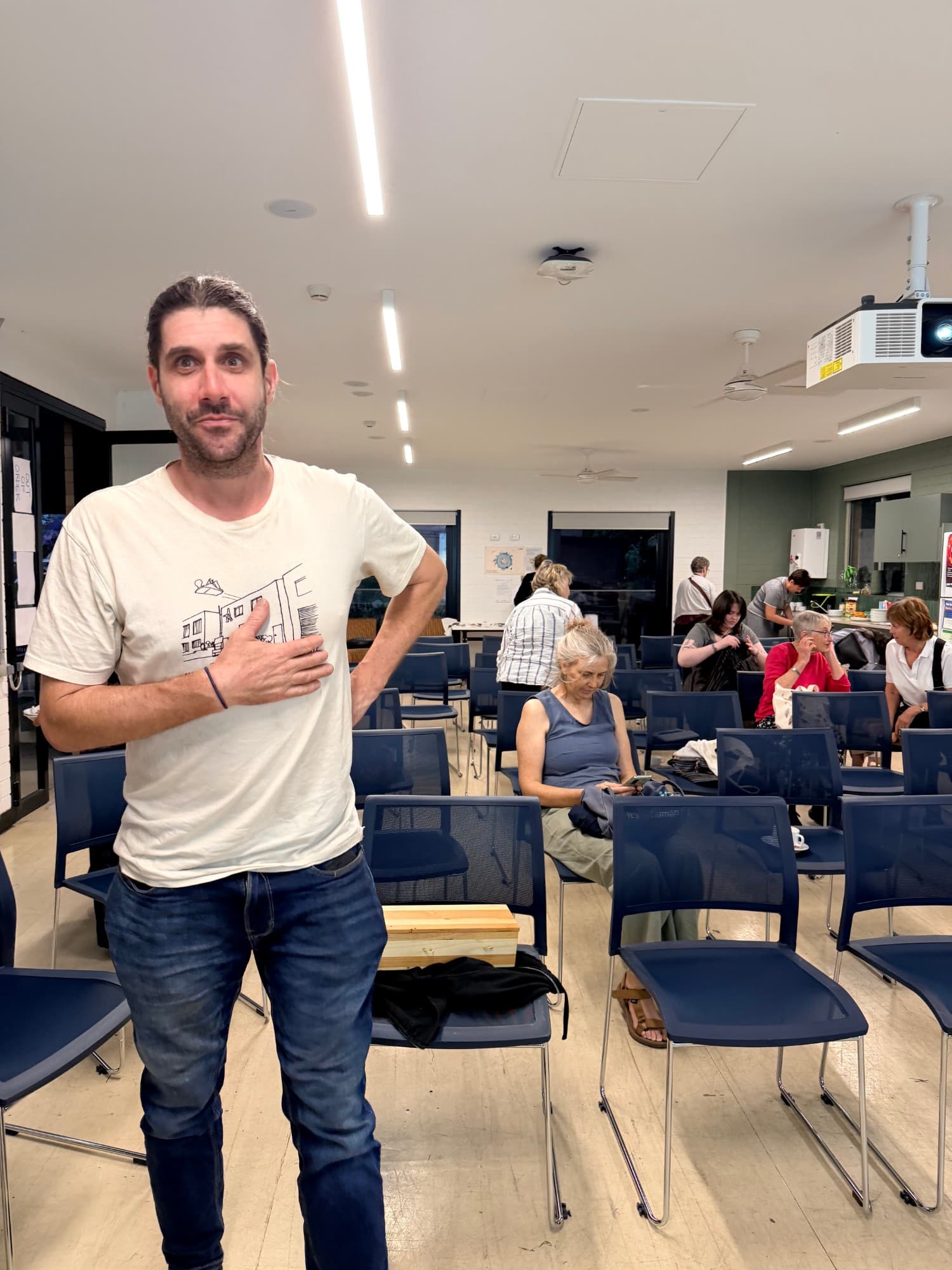 Luke, from fellow social enterprise Among the Trees
Each option has its limits, including what a cemetery or crematorium will accept, and costs vary. An environmental label alone doesn't tell you the price or the overall impact, so we work through the choices and costs with each family.
From Sydney to Bodalla
Choosing Funeral Commons doesn't mean you have to choose conservation burial. We also arrange cremation, cemetery burial and natural burial across Greater Sydney, including at Frenchs Forest Bushland Cemetery. But for families who choose Walawaani Way, this is what the journey can look like:
- Visiting Walawaani Way in person or virtually, and meeting with Olivia in Sydney to talk through wishes. These conversations can happen well before a death, and wishes can change over time.
- When the time comes, bringing the person into our care, with the option for family to help wash, dress or shroud them.
- An optional service in Sydney, or a memorial later.
- Travelling south to Walawaani Way, where families can take part in the burial as much or as little as they wish.
- Time together afterwards. Some families stay a night or two, and many return to visit. Each grave's GPS location is recorded, so it can always be found.
For many families, the journey itself becomes part of the farewell.
What came up on the night
A theme that came up again and again was the wish to return to the earth as naturally as we can.
People also asked about "in perpetuity": how long a grave is protected, and how the land will be cared for into the future. At Walawaani Way, each burial comes with a perpetual interment right. That means the grave will never be reused, and the person buried there will be left undisturbed in perpetuity. Only one person is buried in each grave. The land is protected too: a covenant will be placed on it, so no trees can be cleared in the future, and over time 18 hectares will become protected forest and habitat for native wildlife.
Why talking about it early matters
Whatever you choose, the kindest thing you can do for the people you love is let them know. A conversation now, even a short one, means your family isn't guessing later. If you'd like help putting your wishes into words, we're happy to help. There's no cost for a conversation and no need to prepay.
Coming up: Showing Up for Older Australians
If this conversation has sparked something for you, join us for Showing Up for Older Australians, a free two-day workshop on 8–9 November at Rigpa in Newtown. We're helping bring it to the Inner West in collaboration with the Australian Home Funeral Alliance and the Death Literacy Institute. Register for the workshop.
About Funeral Commons
Funeral Commons is a social enterprise providing funeral care across Greater Sydney and the NSW South Coast, with sustainable death care at its heart. We support families with cremation, cemetery burial, natural and conservation burial, personal farewells, memorials and living wakes.
As we grow, we're committed to reinvesting the majority of our profits into grief and mental health support, assistance for families experiencing financial hardship, and environmental regeneration.
Frequently asked questions
Is conservation burial available in NSW?
Yes. Walawaani Way near Bodalla, on the NSW south coast, is an approved conservation burial ground, and we handle the arrangements and paperwork.
Can I take part in the burial?
Yes, as much or as little as you like. Many families choose to be involved in caring for their person.
Can I plan a conservation burial in advance?
Yes. You can record your wishes now, or arrange a burial after a death. Either way, we're happy to talk it through.
How much does a conservation burial cost?
See our price list. We always give a written quote first.
Talk to us
If you'd like to talk about conservation burial, natural burial or planning ahead, call 0432 833 155 or email connect@funeralcommons.org. We'd love to hear from you.